Blind Spots & Market Fit: Who Are You Really Building For?
by Lace Flowers, Co-founder
A "successful" white coach listened to my pitch.
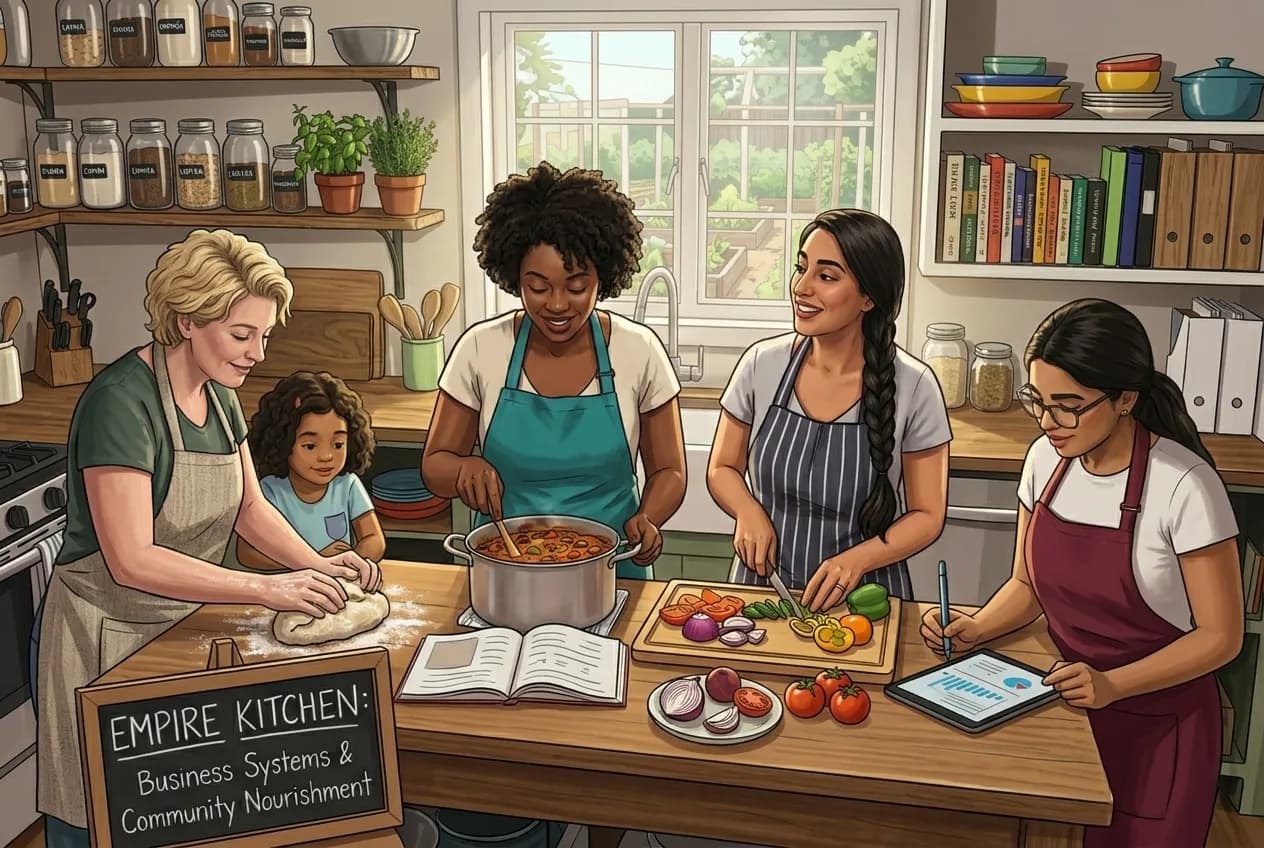
I was trying to get my idea into her "covering all bases" membership for business owners. The idea? Empire Kitchen-community cooking, healthy nutrition from scratch, life skills for kids, connection. Real things that matter, especially when building a business.
Her response: "No one needs to be cooking, worrying about their health or connecting with their kids at this stage in business. You are not needed. Maybe later."
The rejection stung. But it also told me everything I needed to know.
The Blind Spot
Here's what I realized: she wasn't wrong about her market. She was just describing her market.
In her world-the world of certain demographics of white women in urban areas-you can outsource cooking. You hire a chef. You get a nanny. You order delivery. Health and family connection? Those are luxuries you handle after you've "made it."
That made complete sense for the people she served.
But it also meant one of two things was true:
Option A: She was only marketing to women like her, which is fine-but it wasn't transparent. Her "covering all bases" membership didn't actually cover all bases. It covered her bases.
Option B: She didn't care about, or was incompetent at, recognizing the needs of entrepreneurs who looked different from her, came from different backgrounds, and had different constraints.
Both reveal something crucial about how business actually works.
The Market She Couldn't See
Shortly after that conversation, I had eight entrepreneurs inside Empire Kitchen.
Black, brown and white women. Under the six-figure "success" marker. All building real businesses. But they weren't outsourcing health and family. They couldn't. And they didn't want to.
They needed community. They needed to know how to cook nutritious meals without spending money they didn't have. They wanted to build life skills with their kids while actually being present with them. They needed systems that worked for their reality, not someone else's.
That market was invisible to her. But it was everywhere.
What the Research Revealed
In the late summer of 2025, Sutton and I began deep research for our paper: Is It LEGIT: Redefining Equity, Leadership and Influence in Online Business.
My section focused on the hidden systems to business success. And what I found wasn't surprising to me, but it might be to you: food, nutrition, and family dynamics play a huge part in the health and success of an entrepreneur.
But here's what most people don't talk about: access to food and nutrition disproportionately affects entrepreneurs of color. Family dynamics look vastly different depending on your background. The systems that work for one group often fail spectacularly for another.
When you're building a business while navigating food insecurity, or managing family obligations that look nothing like the nuclear family model, or carrying the weight of being the first in your family to build wealth-you need different support.
Not lesser support. Different.
The Transparency Problem
This is where it gets uncomfortable for a lot of people.
If you're marketing to "all entrepreneurs" but your offer only works for entrepreneurs with specific resources, specific backgrounds, and specific family structures, you have a transparency problem.
You're either being dishonest about who you serve, or you genuinely don't see the people you're leaving out.
Both are problems.
And both are what our research examines deeply.
Why We Created the LEGIT Certification
The rejection I received wasn't a failure of my idea. It was a failure of her framework.
But it also showed me something bigger: there's a massive gap between what coaches and business leaders think they're doing around diversity and inclusion, and what they're actually doing.
That's why Sutton and I are creating the LEGIT Certification-to help those who genuinely care to uncover their blind spots. To ensure your business and your marketing is actually inclusive and equitable where race, class, and gender are concerned.
Not performative inclusion. Not surface-level diversity. Real systemic change in how you build, market, and serve.
What Happened Next
I didn't need her validation or her platform.
Instead, I brought Empire Kitchen-and everything it represents-directly into The Flavor Room through Flavor Kitchen. Our quarterly workshop where Flavor Room members cook together, create systems for better nutrition, reconnect with their families, and build life skills with their kids.
Not as an afterthought. Not as something to do "later." As a core part of building a thriving business and a thriving life.
Because here's what that "successful" coach didn't understand: the entrepreneurs who need this most aren't waiting for success to handle their health and their families. They're building success while taking care of both. And they need systems and community to make that possible.
You Can Experience It Yourself
If you want to see what I mean-to taste the work, to experience The Flavor Room, to be part of a community that gets it-there's a complimentary Flavor Kitchen taster session waiting for you.
No pitch. No pressure. Just real cooking, real connection, and real talk about what it takes to build a business that doesn't ask you to abandon the parts of yourself that matter most.
Your market isn't invisible because it doesn't exist. It's invisible because someone isn't looking for it. Make sure you're not that someone.